Open source · MIT · Local-first
Your agency's content team, inside your agent.
A skill and an MCP server that turn your agent into an art director, designer and copywriter. It runs on your machine.opency is a skill and an MCP server that turn Claude Code, Claude Desktop, Cursor, Codex or any MCP client into an art director, designer and copywriter. It runs on your machine; brands and pieces are files you own.

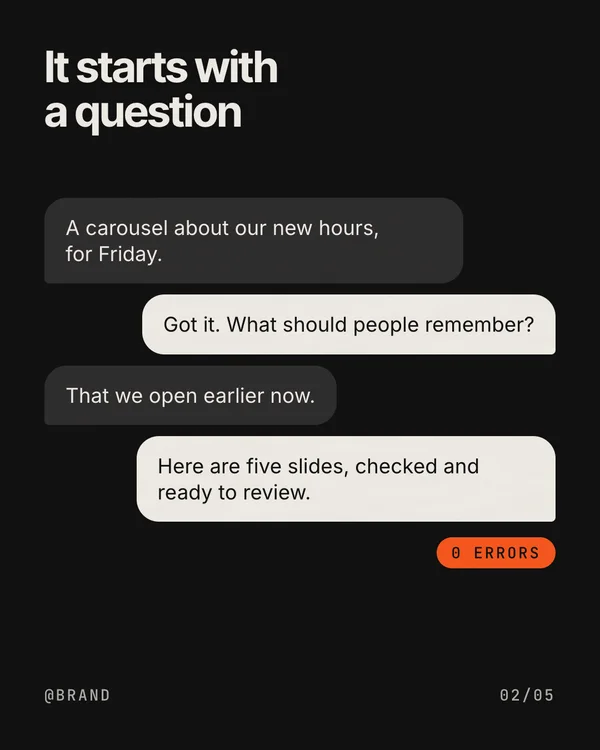
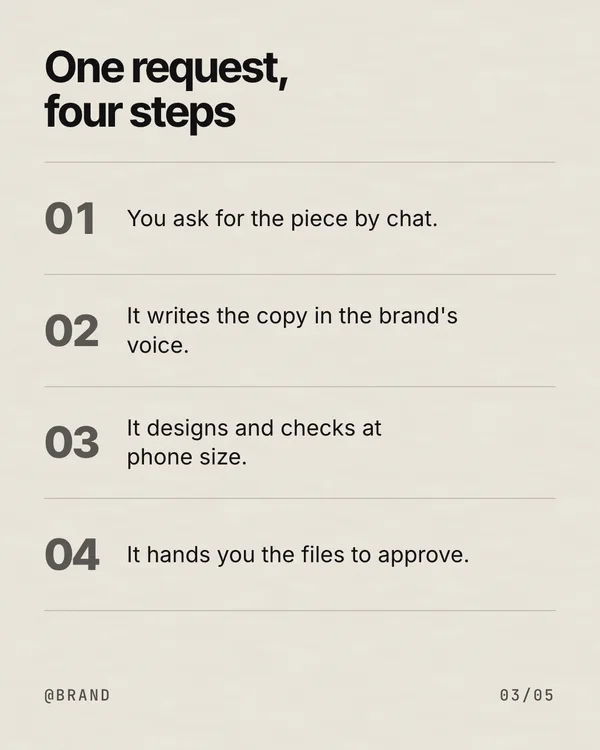
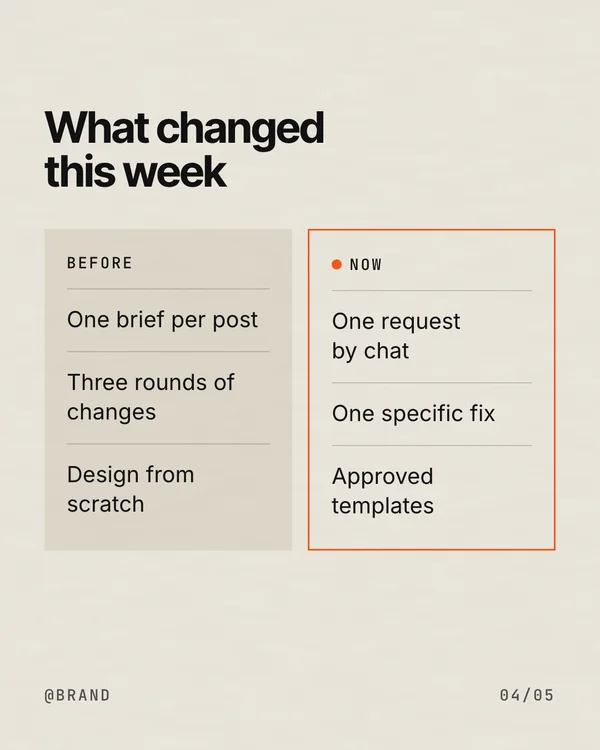
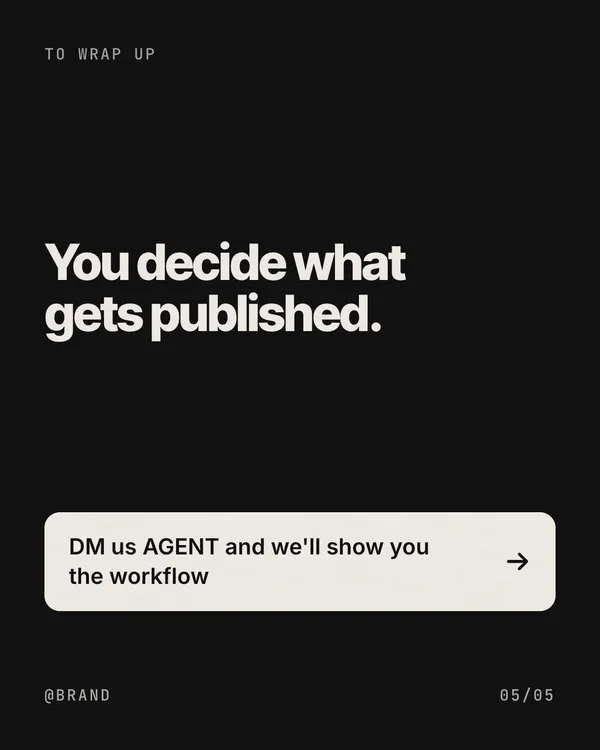
0 errors · ready for your approval
Interactive brief
It asks before it designs.
What you want to convey, goal, audience, offer, tone, channels and dates. It builds the brief from that; only then does it compose.
Demo · fictional brand
brief.json
- goal
- pendinglaunch
- message
- pendingThe morning ritual
- audience
- pendinghome brewers
- channels
- pendinginstagram, linkedin
- verified
- pendingmonday roast · ships in 48 h
Flow
From the brief to a file ready to publish.
Six steps, all inside your repository. The agent does the work; you decide what ships.
- 01
Brief
The agent asks what you want to convey, goal, audience, offer, tone, channels and dates before touching a slide.
- 02
Brand
Imports colors, logo and voice from a website and installs the typefaces by name. Seven color roles, three families and verified facts with a source.
- 03
Campaign
The agent sends each slide as data and opency builds it: carousels, posts and stories in 4:5, 1:1, 9:16 and 16:9, with captions, alt text, PDF and MP4.
- 04
Images
Your photos first; then stock from Openverse and Unsplash with credit and license recorded, focal point and protected regions.
- 05
Quality control
Measured on the render: contrast, safe zones, widows, crops that cut faces, unsourced figures and AI-sounding phrases. Safe fixes are applied automatically.
- 06
Review
A subagent reviews it cold. You get one page to forward to your client and a folder ready to upload. The agent never publishes on its own.
Quality control
It measures the render, not the intent.
Every piece is rendered with Chrome and checked pixel by pixel. Passing checks is not aesthetic approval, which is why a cold review follows.
report.md
- Contrast over photos and gradientsok
- Safe zones per networkok
- Widows in headlinesfixed
- Crops that cut facesok
- Unsourced figuresok
- Phrases that sound like AIfixed
0 errors · 1 justified warning
MCP server
The same tools, in any client.
The skill teaches the agent the craft; the MCP gives it hands. One call goes from copy to a rendered, checked carousel. It runs over stdio, with no server to maintain.
Brand
- brand_get
- brand_import_site
- brand_fonts
- brand_check
Brief
- brief_questions
- brief_interview
Campaigns
- campaign_create
- campaign_brief
- campaign_plan
- campaign_status
Images
- stock_search
- stock_import
- asset_analyze
Pieces
- piece_compose
- piece_edit
- piece_repair
- piece_preview
- piece_handoff
Feed and results
- feed_check
- results_add
Install
Two commands.
Connect the MCP and add the skill. Your brands live in ~/opency, created on first use. You need Node and Chrome.
claude mcp add opency -- npx -y @opency/cli mcpIn Claude Code. For other clients, paste this block into their configuration:
{
  "mcpServers": {
    "opency": {
      "command": "npx",
      "args": ["-y", "@opency/cli", "mcp"]
    }
  }
}
Why
Built for agencies, not for a dashboard.
- Open source
- MIT license. Read the code, change it, send a PR.
- Local-first
- Runs on your machine with your agent. No account, no third-party server.
- Files you own
- HTML and CSS per slide, versionable in git. Nothing is locked in.
- Measured quality
- Checks run on the rendered image, not on a promise.
- Multi-brand
- One folder per brand, with its kit, voice and history, from day one.
Your next campaign, in your repository.
Install it in a minute and ask for the first piece.
npx skills add damianricobelli/opency